
 Follow SlamScanner on LinkedIn
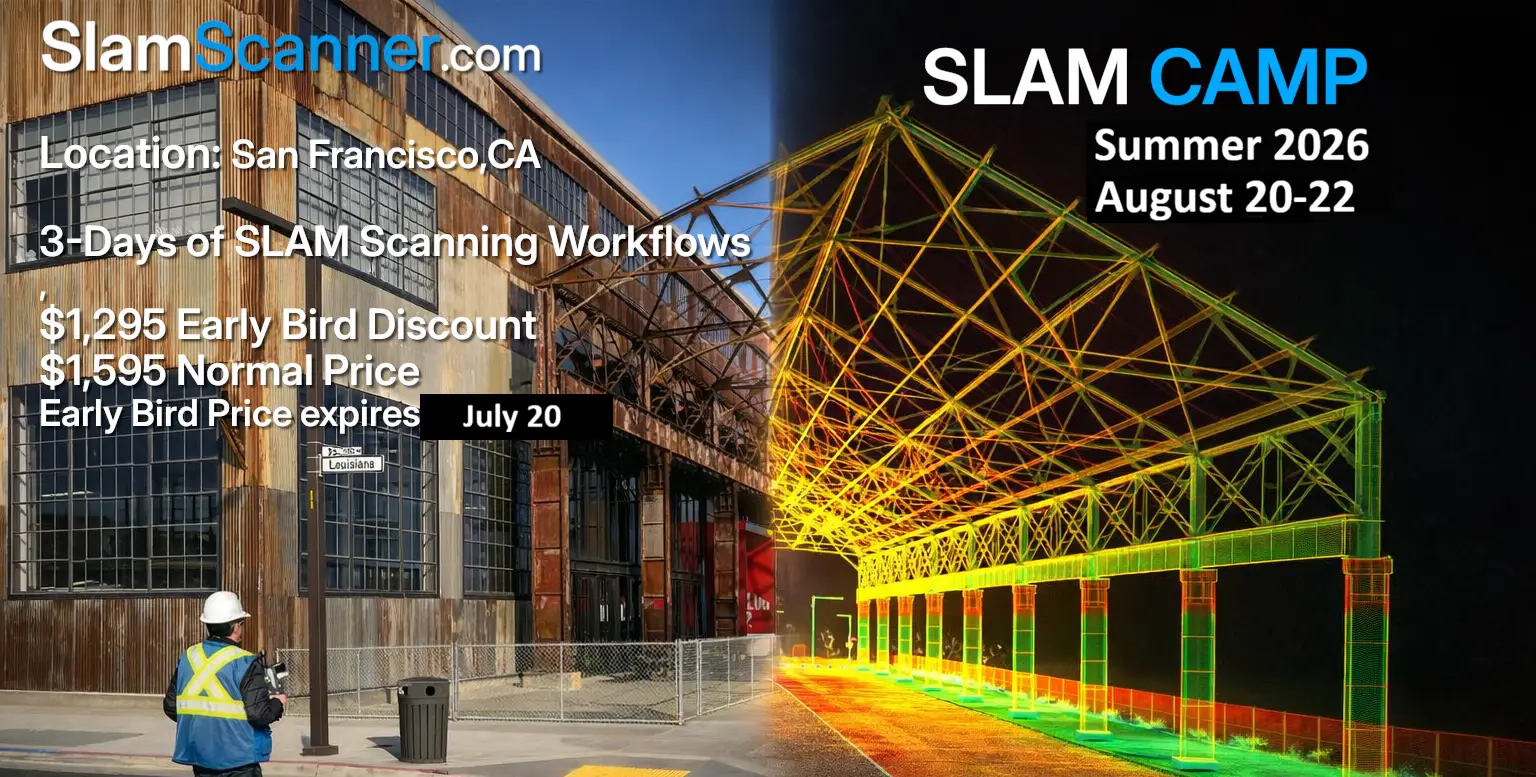
SLAM Camp
Three days working through SLAM workflows together
SLAM Camp is a three-day, hands-on training event focused on real-world SLAM data collection and processing. We spend time together in the classroom, out in the field, and back at the computers, working through the same end-to-end workflows you would use on an actual project.
There’s no sales agenda here and no attempt to make everything look perfect. The goal is straightforward: by the end of the camp, you should be comfortable planning a SLAM job, running the equipment, processing the data, and understanding what the results mean for your work.
If you’re already familiar with SLAM at a high level, this is about turning that familiarity into something practical.
Ready to register or just want the short version?
➜ Register on EventbriteHave questions or want to stay informed about SLAM Camp?
✉ Sign up for Updates or Ask a QuestionHOW THE CAMP IS STRUCTURED
The camp is intentionally small and paced so we can work through things together without rushing. Each day has a clear focus, but the content stays connected — what we do in the field directly feeds what we process later.
Day 1
Classroom, Setup, and First Workflows
We start in the classroom on Day 1. This is where we get everyone oriented and make sure the basics are in place.
We’ll walk through SLAM fundamentals and complete workflows end to end — from powering up and configuring a scanner, to collecting data, to processing and reviewing results. We’ll also make sure software is installed, licenses are working, and laptops are behaving before we head into more serious field work.
There will be hands-on time with scanners on the first day, including small sample scans, so everyone sees the full loop early on rather than waiting until the end of the event.
Day 2
Field Collection
Day 2 is dedicated to field work.
We’ll break into small groups and spend the day collecting data in real environments, both indoors and outdoors. Everyone will get hands-on time with the scanners, within practical limits, and we’ll work through different deployment methods depending on the environment.
Some workflows involve additional constraints — for example, drone or vehicle-mounted scanning may be operated by a licensed pilot or designated driver — but we’ll do our best to accommodate requests. If there’s a specific workflow you’re particularly interested in, it helps to let us know ahead of time so we can plan accordingly.
We’ll cover:
- SLAM workflows using survey control and RTK
- SLAM workflows without GNSS or control
- how capture strategy changes depending on project goals
We won’t force everyone into the same approach. The idea is to show how different choices affect results and where the tradeoffs show up later.
Day 3
Processing, Review, and Integration
On Day 3, we return to the classroom and work with the data collected on Day 2.
This day is about processing, reviewing results, and understanding what you’re looking at. We’ll cover both survey-oriented and non-survey workflows, without going too far in either direction for those who don’t need it.
If you care deeply about GNSS and survey workflows, there will be enough depth to understand how SLAM fits into those pipelines. If you don’t, we won’t spend the entire day in survey theory. The goal is balance — not glossing over important details, but also not turning the camp into a specialized survey course.
As time allows, we’ll also walk through exporting data (LAS, E57) and bringing it into downstream tools such as Recap and Revit. Participants are encouraged to bring their own preferred point-cloud software, and we’ll help work through integration questions where possible.
EQUIPMENT, SOFTWARE, AND WHAT TO BRING
Participants should plan to bring their own laptop if at all possible. To get the most out of the camp, your computer should meet roughly the following expectations:
- Modern multi-core CPU (around 10 cores is a good target)
- NVIDIA RTX-class GPU
- Sufficient free disk space for datasets and processing

THE REST OF THE STORY
Logistics and Daily Rhythm
Work starts at 8:00am each morning. We encourage attendees to take care of breakfast before sessions begin.
Lunch will be provided on all three working days, along with snacks and refreshments throughout the day. We’ll also schedule regular breaks and can coordinate around short work check-ins if needed.
Transportation will be provided for:
- the field collection day
- the hosted evening event on Day 2
On the evening of Day 2, we’ll host a group dinner for anyone who wishes to join. This is meant to be relaxed and social, not formal.
Plus-Ones and Guests
If you’d like to bring a plus-one, we can usually accommodate this with some advance notice.
Plus-ones won’t participate directly in the training itself, but they’re welcome to:
- stop by classroom sessions briefly
- potentially accompany the group on the field day
- attend the hosted evening dinner
Depending on their level of participation, we may ask for a small fee to help cover meals or transportation. Just let us know what you’re thinking and we’ll work it out.
Location and Accommodations
Classroom sessions will be held at a host hotel in the San Francisco Bay Area. We expect most attendees will stay there at a negotiated group rate, though this is not required.
All attendees will need to be on site each morning in time for the 8:00am start, regardless of where they stay. Final location details and hotel information will be shared after registration.
Safety and Field Conditions
The field day will take place in an urban industrial area with public access. It’s a low-traffic environment, but situational awareness is important.
We’ll provide reflective PPE for the field day. Attendees should come prepared to spend a significant portion of the day outdoors and bring any additional personal protective gear they prefer.
This is not a remote or extreme environment — restrooms, coffee shops, and other basic services are nearby.
What You Should Leave With
By the end of SLAM Camp, you should be able to plan and execute a SLAM scanning project with confidence. That includes understanding how to:
- assemble and operate the equipment
- configure capture workflows (with or without GNSS)
- offload and process data
- interpret results and limitations
- export and integrate point-cloud data into other tools
The intent isn’t to make you an expert in everything, but to make sure you leave knowing how this actually works in practice.